


Best Web3 Consulting Firms in 2026
ReviewSix Web3 consulting firms compared, with self-reported figures from their official sites, plus how to scope, vet and price an engagement.

Published November 9, 2026 | Last updated November 9, 2026, 08:00 UTC
Editorial credits
Writer · CoinLiveDuty editor · CoinLiveMonitors published articles around the clock and can correct or withdraw them.Checked by CoinLive QC Team before publishing on November 9, 2026 for headline accuracy, original value, factual consistency, commercial disclosure, authorship claims, review evidence and risk disclosure: our AI review system checks every article before it goes live, and our duty editor monitors it after publication. Report an error.
CoinLive uses AI for research, drafting and review. Our editorial team is responsible for every article and corrects or withdraws articles when needed. How we review.
Disclaimer: This article reflects editorial research and opinion. It does not constitute professional services advice. Choosing a consulting firm depends on project scope, budget and team fit. Do your own due diligence, ask for references and define scope clearly before signing any engagement.
Commercial disclosure: This article contains no affiliate or referral links, and the order of firms reflects our editorial judgment only. Links point to each firm's own website for verification.
How we sourced this guide: where a firm section includes figures, they are the firm's own claims as shown on the linked official website on November 9, 2026, and are labelled as self-reported. We have not independently audited them. Hourly rates, user counts and other numbers we could not find on an official page have been removed.
Quick Verdict Table
| Firm | Specialization | Pricing | Best For | Official site |
|---|---|---|---|---|
| Alta Lab | Market infrastructure, advisory | Not published | Token project growth and market access | altalab.io |
| LeewayHertz | AI and blockchain development | Not published | Enterprise blockchain and AI integration | leewayhertz.com |
| Consensys | Ethereum infrastructure, audits | Not published | Ethereum-native protocols | consensys.io |
| Coinbound | Web3 growth marketing | Not published | Token launches, influencer marketing, PR | coinbound.io |
| Blockchain App Factory | Development and Web3 marketing | Packages on request | DeFi, NFT and token launch builds | blockchainappfactory.com |
| PixelPlex | Custom blockchain development | Not published | Custom DApps and enterprise solutions | pixelplex.io |
What Do Web3 Consulting Firms Actually Do?
Web3 consulting firms operate across a wide spectrum. At one end are pure technology firms that build smart contracts, DApps, blockchain infrastructure, and backend systems for clients who have the business vision but not the engineering capability. At the other end are strategic advisory firms that help projects think through tokenomics, go-to-market positioning, exchange listings, investor relations, and regulatory strategy, without writing a line of code.
Most firms occupy the middle ground, combining some development capacity with strategic advisory. Understanding which type of firm you need is the first question any project should answer before beginning an engagement.
Projects hire Web3 consultants for work such as:
- Protocol architecture and smart contract development: Building the technical foundation of a DeFi, NFT, or layer-2 project from scratch or auditing an existing codebase.
- Token design and economics: Modeling token distribution, vesting, emissions, and utility to ensure the economic design is sustainable.
- Market infrastructure: Exchange listings, liquidity strategy, market-making relationships, and CoinMarketCap or CoinGecko profile management.
- Regulatory strategy: Navigating SEC, MiCA, MAS, or other jurisdictional requirements, for example before a token sale or institutional fundraise.
- Enterprise blockchain integration: Helping traditional enterprises, logistics, healthcare, finance, integrate distributed ledger technology into existing operations.
- Go-to-market and growth: Community building, content strategy, influencer marketing, PR, and launch execution.
The diversity of these functions means that the "best Web3 consulting firm" depends entirely on what a project actually needs.
How We Evaluated These Firms
We assessed each firm across five dimensions:
- Technical depth: Can the firm build or audit at the smart contract level, or does it rely on third-party developers?
- Track record: What projects has the firm worked with, and can those engagements be verified?
- Chain expertise: Is the firm genuinely multi-chain, or does it have deep expertise in one ecosystem and surface coverage elsewhere?
- Client fit: Does the firm serve early-stage startups, mid-market projects, or enterprise clients? The right choice depends on your stage.
- Transparency and pricing: Are rates and scope expectations communicated clearly before engagement?
1. Alta Lab: Best for Market Infrastructure and Strategic Advisory
Official site: altalab.io
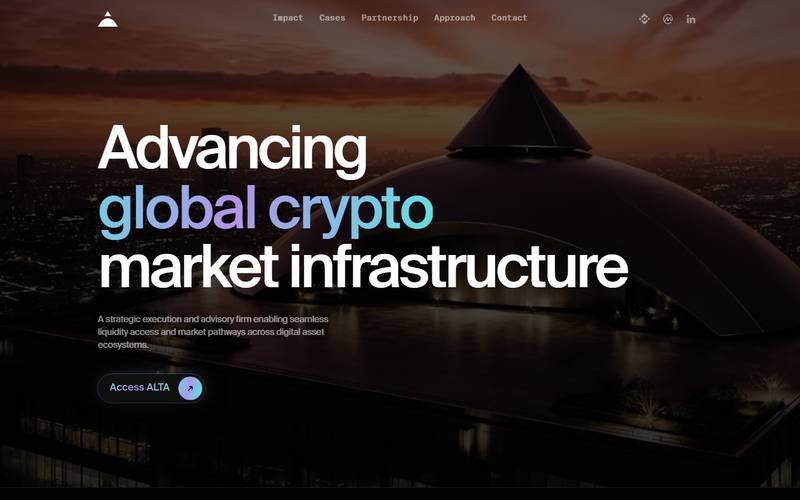
Self-reported on altalab.io (retrieved November 9, 2026): total market capitalization of its clients shown as about $15.4 billion (Updated: 2025), client market capitalization increased by up to 325% over the past three years, and 800.000+ followers generated through CoinMarketCap audience expansion.
What They Do
Alta Lab is a strategic execution and advisory firm focused on the market infrastructure layer of crypto: how a token project reaches markets, builds an audience and accesses liquidity. Its site describes work across strategy, wallet and fiat on-ramp integrations, and CoinMarketCap audience growth.
These are the firm's own numbers. Client market caps are driven by the whole market, not only by an advisor, so ask for named references and specific attributable results before you hire.
Who It Is Best For
- Token projects before or after listing that need market presence and liquidity
- Projects expanding from one regional market to a global audience
- Teams that need an execution partner rather than a development shop
Pros and Cons
| Pros | Cons |
|---|---|
| Crypto-specific market access focus | Limited public case study detail |
| CoinMarketCap and CoinGecko audience experience | Not a development firm |
| Clear advisory positioning | Pricing not published; metrics are self-reported |
2. LeewayHertz: Best for Enterprise Blockchain and AI Integration
Official links: leewayhertz.com / Blockchain development services
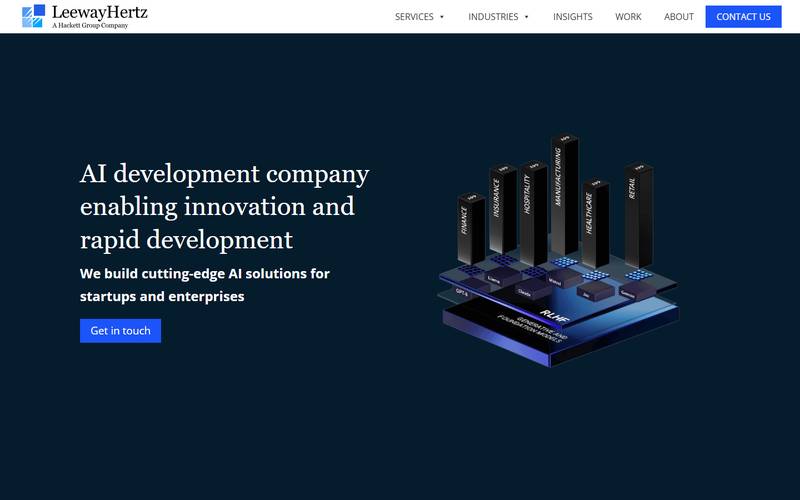
Self-reported on leewayhertz.com (retrieved November 9, 2026): over 15 years of experience.
What They Do
LeewayHertz is a technology consulting and development firm with a long history in software and a large blockchain practice. Its service pages list smart contract development and audits, Ethereum dApps, Hyperledger, Substrate, Solana, Cosmos, Tezos and Stellar development, NFT marketplaces and crypto wallets. Its site also lists an AI practice covering AI strategy, custom LLMs and AI agents.
The firm offers team extension and project-based engagement models.
Pros and Cons
| Pros | Cons |
|---|---|
| Long software track record | Pricing is not published |
| Broad multi-chain service list | Broad service mix, so check the blockchain team assigned to you |
| Combines AI and blockchain work | Not focused on token launches or market making |
3. Consensys: Best for Ethereum-Native Protocol Development
Official links: consensys.io / Consensys Diligence audits

From consensys.io (retrieved November 9, 2026): founded in 2014 by Ethereum co-founder Joseph Lubin and a core contributor to the Ethereum ecosystem.
What They Do
Consensys builds Ethereum tools including the MetaMask wallet and Infura node infrastructure. Its Diligence team runs smart contract audits and security reviews and publishes public audit reports.
The combination of wallet distribution, infrastructure and security services makes Consensys a strong option when a project needs deep Ethereum expertise and institutional credibility.
Who It Is Best For
- Projects building on Ethereum that need enterprise-grade infrastructure
- DeFi protocols looking for a well-known security audit provider
- Financial institutions exploring Ethereum integration
Pros and Cons
| Pros | Cons |
|---|---|
| Builder of MetaMask and Infura | Pricing is not published |
| Public audit reports from Diligence | Ethereum-centric |
| Long history in Ethereum development | Less relevant for non-EVM chains |
4. Coinbound: Best for Web3 Growth Marketing and Token Launches
Official site: coinbound.io
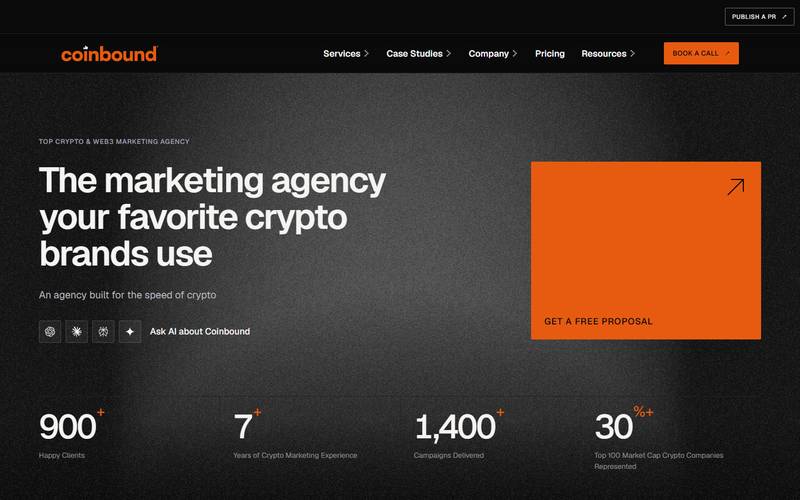
Self-reported on coinbound.io (retrieved November 9, 2026): 900+ clients, 7+ years of crypto marketing experience, 1,400+ campaigns delivered, and a case study saying it increased Nexo's social media engagement by over 500%.
What They Do
Coinbound is a Web3 marketing agency. Its value is distribution: getting a project in front of the right audience, earning press coverage and building community momentum around a launch. Unlike the technical firms above, it does not build smart contracts.
Key Services
- Crypto influencer marketing
- PR and earned media
- Social media management and paid advertising
- Fractional CMO and advisory services
- Event production
Pros and Cons
| Pros | Cons |
|---|---|
| Crypto-specialist marketing team | Marketing only, no technical development |
| Public case studies | Influencer results vary with the market cycle |
| Broad service mix | Pricing not published |
5. Blockchain App Factory: Best for Full-Stack DeFi and NFT Development
Official site: blockchainappfactory.com
Self-reported on blockchainappfactory.com (retrieved November 9, 2026): 13 years in crypto, 500+ marketing campaigns, $1B+ raised by clients, 90+ token launches, 250 engineers in-house, and ISO/IEC 27001 and SOC 2 Type II listed on its homepage.
What They Do
Blockchain App Factory is a blockchain development company that also runs a Web3 marketing arm. Its service menu covers token development and launches, smart contract development and audits, exchange and DEX builds, NFT marketplaces, RWA tokenization, trading bots and launchpads.
Who It Is Best For
- Projects that need a full technical build
- Standard DeFi components (staking, swaps, bridges, marketplaces) rather than novel research
- Teams that want development and marketing from one vendor
Pros and Cons
| Pros | Cons |
|---|---|
| Wide service coverage | Less depth on novel architecture |
| Development and marketing under one roof | Quality can vary between project teams |
| Multi-chain capability | Less institutional profile than Consensys |
6. PixelPlex: Best for Custom DApp and Enterprise Blockchain Solutions
Official site: pixelplex.io
Self-reported on pixelplex.io (retrieved November 9, 2026): building software since 2007, 11 years leading blockchain, 450+ success stories and $1.2B raised by the clients.
What They Do
PixelPlex is a full-stack development company with a blockchain practice covering consulting, crypto wallets (including MPC and cards), crypto payments, smart contract design and audits, dApps, DeFi, NFTs, tokens and Web3 development. It publishes detailed case studies, which makes it easier than usual to see what it has built.
Pros and Cons
| Pros | Cons |
|---|---|
| Multi-chain technical depth | Less focus on marketing and growth |
| Detailed public case studies | Pricing not published |
| Works with crypto-native and enterprise clients | Capacity limits on very large engagements |
What to Look for When Hiring a Web3 Consultant
1. Define your need precisely before you approach any firm
The biggest waste in Web3 consulting engagements comes from clients who approach a firm with "build our DeFi protocol" as the brief. Before engaging anyone, define: What is the specific problem? What does done look like? What is the timeline and budget? The clearer your brief, the more accurately a firm can scope and price the work.
2. Verify references independently
Most Web3 consulting firms publish client logos. Not all of those logos represent deep engagements. Ask for specific client references in your use case and speak to them directly before committing.
3. Understand what "Web3" means to the firm
Some firms describe themselves as Web3 consultants because they have built one NFT project. Others have years of smart contract development and DeFi architecture. Ask for their specific experience in your stack (Solana vs. Ethereum vs. L2 vs. enterprise private chain) and their most technically complex project.
4. Separate marketing claims from verifiable metrics
Claims like "hundreds of projects delivered" are meaningless without names and references. Look for firms with public client lists, Clutch or G2 verified reviews, and audit reports or deployed contract addresses you can examine.
5. Match firm size to your project stage
A Fortune 500 enterprise and a pre-seed crypto startup have different needs. Ask each firm for examples of past clients at your stage and budget, and compare them on the same written scope.
Red Flags in Web3 Consulting
- No public client list or verifiable case studies: If a firm can't name projects they've worked on (even with privacy caveats), that is a significant warning sign.
- Guaranteed exchange listings or price outcomes: No legitimate consulting firm can guarantee an exchange listing or a token price outcome. These claims indicate either incompetence or fraud.
- Offshore development shops misrepresenting as strategy firms: Development execution and strategic advisory are different skills. Ensure the firm you hire is matched to what you actually need.
- Upfront full-payment demands for large engagements: Standard consulting practice involves milestone-based payments. A firm demanding full payment before any deliverable is a red flag.
- No audit, no whitepaper, no deployed contracts to reference: For technical firms, ask to see deployed, audited code. If a firm cannot show you contracts they've shipped that are in production, proceed cautiously.
Choosing Between a Boutique and a Full-Service Firm
One of the most practical decisions a Web3 project makes is whether to hire a boutique specialist or a full-service firm.
Boutique specialists are firms focused on a narrow function: a tokenomics design consultancy, a smart contract audit firm, or a go-to-market agency for crypto token launches. They suit projects that need one function done well rather than an end-to-end build.
Full-service firms (LeewayHertz, Consensys, Blockchain App Factory) provide end-to-end capability, from architecture and smart contract development through UI, testing, deployment, and ongoing maintenance. They can reduce coordination overhead for large, complex builds, but ask for itemized quotes because pricing is not published.
The right choice depends on your project's current stage and primary constraint:
- Pre-seed or idea stage: Boutique tokenomics or strategy advisors. Full technical builds are premature.
- Seed stage building MVP: Full-service technical firm, scoped clearly to the MVP deliverable.
- Post-launch scaling: Specialist marketing (Coinbound), security audits (Diligence), and infrastructure (Consensys, Infura) become relevant.
How to Structure a Web3 Consulting Engagement
Structuring the engagement correctly is as important as choosing the right firm. Common failure modes:
Vague scope leads to scope creep. Before signing, define: what are the deliverables? What does "done" mean for each? What is the acceptance criteria?
Milestone payments reduce risk. For large engagements, structure payments against deliverables, with a modest upfront payment and the rest tied to milestones. This aligns incentives and ensures you receive value before paying in full.
Code ownership must be explicit. Ensure the contract specifies that you own all developed code outright upon final payment. Without this clause, some firms retain ownership or licensing rights.
Security audits are not optional for production code. No legitimate firm delivers a production smart contract that holds user funds without recommending an independent audit. If a firm discourages audits to reduce costs, that is a red flag.
Retain internal technical oversight. Even if you lack deep blockchain engineering expertise internally, having a technical advisor review deliverables independently prevents situations where a firm bills for work that doesn't meet standard. Platforms like Braintrust and Toptal allow you to hire a short-term technical reviewer without a full engagement commitment.
FAQ
What does a Web3 consulting engagement cost?
None of the six firms here publish standard rates. Ask each firm for a written quote, and get at least two quotes for the same scope.
Do I need a Web3 consultant or a Web3 development firm?
If your problem is strategic (tokenomics, go-to-market, investor relations, regulatory structure), you need a consultant. If it is technical (smart contracts, DApps, exchange infrastructure), you need a development firm. Most projects need both, in the right order.
Can I hire a freelancer instead of a firm?
Yes, for scoped technical tasks. Platforms like Braintrust, Toptal and web3.career list blockchain developers. For a full protocol launch, audit or go-to-market plan, check whether the firm offers project management and QA.
How do I verify a smart contract audit firm's quality?
Read its published audit reports. Firms such as Consensys Diligence, Trail of Bits, OpenZeppelin and CertiK publish reports with vulnerability classifications. Check that the audited contracts are deployed and whether any were later exploited.
Is Alta Lab a development firm or an advisory firm?
Advisory and market infrastructure. Its site focuses on market access, audience growth and integrations rather than smart contract development.
How long does a typical engagement take?
It depends on scope, and none of the six firms publish standard timelines. Agree deliverables and timelines in writing before you sign.
Sources (retrieved November 9, 2026): altalab.io, leewayhertz.com, consensys.io, consensys.io/diligence, coinbound.io, blockchainappfactory.com, pixelplex.io.
More From Review

Ondo Finance Review 2026: USDY, OUSG, Ondo Stocks and ONDO
A screenshot-based review of Ondo Finance in November 2026: the USDY and OUSG product pages, Ondo Stocks, the app, the wallet connect modal, live numbers from D...

4Dlabs (@4Dlabs_Official), Season 1 In-Depth Review & Airdrop Positioning Playbook
4Dlabs (4dlabs.space / dapp.4dlabs.space / @4DlabsOfficial) represents a vital infrastructure breakthrough at the intersection of Web3, robotics, and…
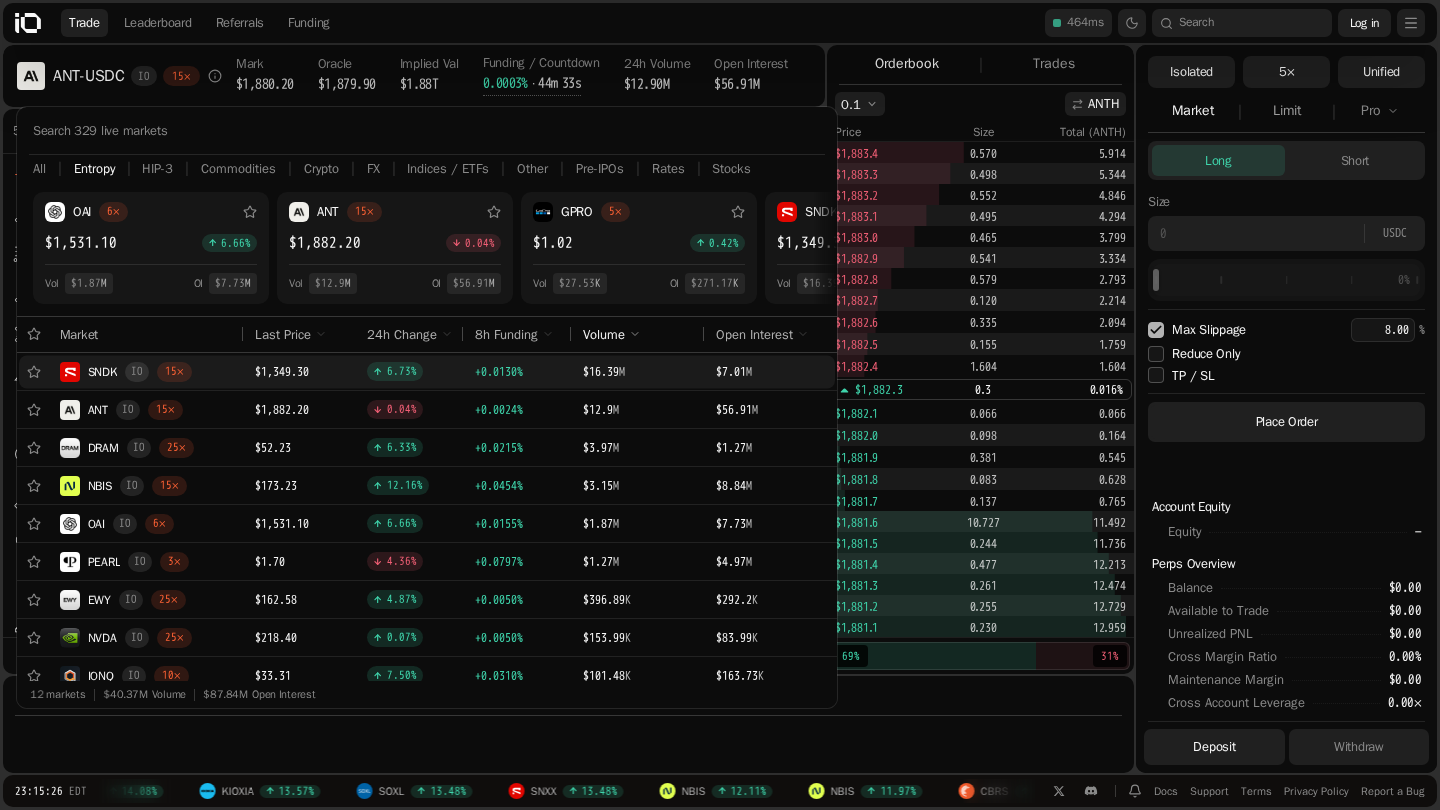
Entropy.io Review (2026): Markets, Trading Tools, Fees, and Risks
A hands-on look at Entropy.io’s public trading interface, with screenshots of pre-IPO, stock and ETF markets, plus fees, risks and competitors.

Aster DEX Review 2026: Perp Trading, asBNB Yield, and the 1001x Leverage Question
Aster combines perpetual futures up to 1001x leverage, spot trading, and yield products like asBNB and USDF across multiple chains. Read the honest review, incl...
Perpl Review 2026: Complete Beginner’s Guide to the On-Chain Perps DEX
Perpl review 2026 covering its Monad-based on-chain order book, fees, leverage, liquidation risk, points, security, access limits, and competitors.
ZEC Review 2026: I Spent a Day with Zcash, The Privacy Coin That Invented zk-SNARKs
I went into this review expecting a niche privacy coin with a cult following and a dusty website. What I found was more complicated: a genuinely…

Author
Akita Inu
Akita Inu covers fast-moving crypto market updates, exchange news, and token ecosystem developments for CoinLive, with a focus on concise source-led reporting.